Without giving away too much of the ending, I’ll just say that the characters encounter some other survivors and things get...a little crazy. It shows that in a climate disaster, the real threat isn’t necessarily the deteriorating environment, it’s how people react to it. This movie serves as a great example of what happens when people are driven to the extremes by climate change. I didn’t write my wiki post about this movie, even though it deals with the direct effects of climate change more directly and frequently than the book I read (Feed, M.T. Anderson), because this movie is in no way appropriate for classroom viewing. It is very violent and has some possibly triggering scenes of forced sexual advances. However, I do think it is interesting to compare different possible future worlds that have been affected by climate change, and this movie poses a possible future that could lend a hand to answering the question, what will our world look like as it heats up, and how will people react to it?
Tuesday, March 15, 2016
Hell
Without giving away too much of the ending, I’ll just say that the characters encounter some other survivors and things get...a little crazy. It shows that in a climate disaster, the real threat isn’t necessarily the deteriorating environment, it’s how people react to it. This movie serves as a great example of what happens when people are driven to the extremes by climate change. I didn’t write my wiki post about this movie, even though it deals with the direct effects of climate change more directly and frequently than the book I read (Feed, M.T. Anderson), because this movie is in no way appropriate for classroom viewing. It is very violent and has some possibly triggering scenes of forced sexual advances. However, I do think it is interesting to compare different possible future worlds that have been affected by climate change, and this movie poses a possible future that could lend a hand to answering the question, what will our world look like as it heats up, and how will people react to it?
Wednesday, February 24, 2016
Zeitoun
Zeitoun by Dave Eggers is a novel about the Zeitoun family and their experience during hurricane Katrina. The Zeitoun's are a muslim family living in New Orleans, the father, Abdulrahman (though everyone called him Zeitoun), immigrated from Syria and started a painting and contracting business. The mother, Kathy, a Baton Rouge native, converted to Islam and helps run the business and care for their three daughters and her one son. Since this is a true story about a real family, it goes into great detail about the family themselves, little stories from their past, how Zeitoun and Kathy met, Zeitoun's life in Syria, and how the business is fairing. It alternates between the perspectives of Zeitoun and Kathy. This book would be a great way to introduce that type of writing style.
When Katrina was coming up on New Orleans, Kathy and the kids left for Baton Rouge to stay with a few of her sisters. Zeitoun decided to stay behind. He was able to save a lot of the family's belongings when the levees eventually broke and the city was drowned in about 15 feet of water. My favorite parts of this book are when Eggers is describing how the world looks when covered with water. Zeitoun has a canoe in which he paddles around the city, helping save stranded people and animals. He lives like this for a while, keeping in contact with Kathy through a phone that still works in one of the rental houses he owns. Zeitoun and three other men who are using the phone are later arrested for "looting"...in their own home. They are all taken to a makeshift jail behind the Greyhound station (which was built using man-power imported from the Louisiana State Pen. only days after the storm) , not given a phone call, or read their rights. They are accused of being terrorists and are made to stay in a cage outside containing only a metal rail and expected to sleep on the filthy ground. These conditions persist for several days, when finally they are put on a bus and taken to a prison in St. Gabriel. They are still denied a phone call, and as hard as Zeitoun tries he is unable to convince anyone that he is innocent until finally gets a priest to contact Kathy on his behalf. From there the book covers Kathy's efforts to get Zeitoun out of prison. She is met with people who tell her the location of the hearing is “classified information” and a bunch of other ridiculous things that, had the government been working properly, would never have happened. Though eventually Zeitoun is released from prison, it was apparent that the judicial system was not working for a very long time after the storm, and many people suffered because of that.
Reading this book gave me a lot of emotions. At some points I was disgusted with the actions of people in power, and the actions of the prison system as a whole. Racial and religious profiling are still a problem in America and this book just reinforced the fact that the care and safety of POC and low income individuals are not a priority in this country. It makes me very sad that the people and institutions put in place to protect citizens could do such a botch job. I understand that after the hurricane nothing was working properly, but it seems silly to prioritize building a temporary jail instead of using those resources and money to save the hundreds of civilians who were trapped in their homes. Climate disasters wreck the whole system.
Sunday, February 14, 2016
Desert Solitaire
Desert Solitaire: A Season in the Wilderness by Edward Abbey is the storey of a man (Abbey) who worked as a national park ranger in Utah for Arches National Monument. The book was written in 1968, so it’s a few decades old and the picture Abbey paints of the wild desert is one that I’m sure exists next to nowhere in the current world. In the first few chapters Abbey describes the land that he is living on, the little house-trailer that he is staying in and the many creatures that call the Utah desert home. As someone who loves to read about nature and has a soft spot for personification and descriptive language, so far this book has been a dream. In describing his book Abbey writes, “I believe that there is a kind of poetry, even a kind of truth, in simple fact. But the desert is a vast world, an oceanic world, as deep in its way and complex and various as the sea. Language makes a mighty loose net with which to go fishing for simple facts, when facts are infinite.” (pg XIV)
This book has really made me stop and appreciate things in my own world more. On the first page Abbey states that “Every man, every woman, carries in heart and mind the image of the ideal place, the right place, the one true home, known or unknown, actual or visionary.” This got me thinking, and I experienced what I believe to be the beginnings of my perfect place. I was walking home around 11 o’clock the other night, and it was softly snowing, but there was no wind. I was walking through campus and that late I rarely see anyone, maybe a few people at the most. This night however, I got the overwhelming feeling that I was the only person on the whole of campus. All the buildings had their lights shut off, it was so quiet. My footsteps in the snow where deafening. I didn’t even hear cars or snow plows in the distance. It was in this gentle silence that I found my perfect place. It is peaceful, the cold and snow keep it that way. Everything was asleep and I was there to witness it. I love it when books can help me notice moments like that.
Getting back on topic, there was a bit of the second section of Desert Solitaire, aptly titled “Solitaire”, where Abbey describes turning on an electricity generator to power his trailer house when the sun goes down. He says that he is “shut off from the natural world and sealed up, encapsulated, in a box of artificial light and tyrannical noise.” (pg 13) I felt that this line really speaks of how we as a civilization are. Disconnected from the natural world with barriers of light emitted from countless electronic devices. Smartphones distracting those from everything going on around them, streetlights choking out the stars, neon everywhere. Abbey continues “I have cut myself off completely from the greater world which surrounds the man-made shell.” (pg 13) Again, this is exactly how we live, except we can’t turn off the generator and return to a peaceful night. One has to drive for hours to reach somewhere void enough of light pollution to even experience true night. Above is a map of Michigan showing its light pollution levels. The great thing about this site is that you can zoom in, below is our lovely WMU campus! It's got the whole world so you can see which countries or areas have the most light pollution. The interesting thing is that it's got data going back to 2010, and if you switch back to that overlay you can see that light pollution used to be way worse, which suprised me.
So far I am really enjoying this book, I can’t wait to read what else Abbey has to say about the desert, nature, and how we are all connected. “We are kindred all of us, killer and victim, predator and prey, me and the sly coyote, the soaring buzzard, the elegant gopher snake, the trembling cottontail, the foul worms that feed on our entrails, all of them, all of us. Long live diversity, long live the earth!” (pg 34)
Sunday, February 7, 2016
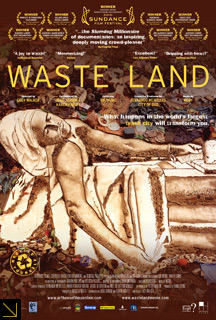
Waste Land
This film really speaks of the human’s ability to waste an insane amount of matter, and our talent for casting things undesirable to the side. Muniz put it as “this is where everything that is not good goes, including the people.” Throughout the course of the film, with the people Muniz gets to help make the pieces of art, and to pose for them, you really fall in love with them. Their spirit, their personalities. These are human beings and it broke my heart to learn how some have to live. One woman, Suelem Pereira Dias, has worked in the dump since she was 7 (she was 18 at the time of filming), she is such a beautiful young lady, posed with her two children, immortalized in trash. She said that “If I don’t die, it’s not bad.” One day she found a dead child amongst the trash, “There was a baby there that had been thrown away.” We are a throw away species, it seems like it's all we know how to do.
Sunday, January 31, 2016
Learning to Die in the Anthropocene
Scranton also speaks about how hard it is for the average citizen to raise any awareness or get anything done relating to climate change because “no matter how many people take to the streets in massive marches or in target direct actions they cannot put their hands on the real flows of power, because they do not help produce it. They only consume.” (pg 60) He raises the point that it is the few powerful corporations who have all the power relating to coal production and CO2 emissions because they are the ones who produce it, and those who consume are always going to be at their hands. This is a very important point and gives me a reason why I feel so helpless to this whole situation we’ve got ourselves into.
Another thing that Scranton said that made me stop and think was that “every time you check your email, you’re heating up the planet” (pg 68) It’s something that i don’t think about, how electronic things, even cell phone, the internet, it all runs on coal. On the same page he goes on to say that “The problem is that the problem is too big. The problem is that different people want different things. the problem is that nobody has real answers. The problem is that the problem is us.” Which I think is a really beautiful way to put it. Tuesday, January 26, 2016
Ocean Acidification
Ocean acidification occurs when carbon dioxide gets combined with seawater, which results in carbonic acid. Carbonic acid lowers seawater pH levels. Seawater naturally buffers against pH changes, but that process uses up carbonate ions in the water, which are an "essential ingredient in the creation of calcium carbonate shells and skeletons produced by a large number of marine animals" such as coral, marine plankton coralline algae, and shellfish. As the levels of carbon dioxide in the atmosphere increase, so do the levels in the ocean, which raise the temperature, which make it harder to live there. It is a vicious cycle, everything is connected. It’s hard to find something that has gone completely unaffected by the rising levels of CO2 on the planet.
Although every living thing in the ocean is affected by falling pH levels, one of the things most at risk are coral reefs. Coral reefs house the highest levels of marine biodiversity, they’re basically like rainforests under the water. They protect coastlines from ocean erosion and help reduce the size of waves coming in from open waters.
Here is a link to my presentation slides.
Tuesday, January 19, 2016
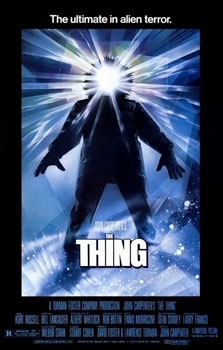
"Why don't we just...wait here for a little while...see what happens?" - MacReady, The Thing (1982)
Chapter 2 of Eaarth by Bill McKibben focused primarily on the economy of the world, and how it has lead to the disastrous global changes we are seeing today. Larry Summers put the American government’s views of economic growth as truthfully as possible when he said that they “cannot and will not accept any ‘speed limit’ on American economic growth. It is the task of economic policy to grow the economy as rapidly, sustainably, and inclusively as possible.”(47). It is exactly this type of attitude that got us where we are today. It is no longer viable and feasible to have a continuously growing economy, especially a rapidly growing one. “We don’t just need a bailout. We need a reboot. We need a build out. We need a buildup. We need a national makeover.”(50). One thing that really struck me as honestly just stupid, is that the government is constantly trying to say that the cost of cleaning up this planet, for looking for and implementing clean means of energy production, is too expensive. Yes, it is expensive, the cost for curing this world is astronomical. However, the cost for damage and repairs to cities that are being ravaged by storms year after year, storms that are not going to stop happening (they are a permanent fixture of this new Eaarth) cannot possibly be less expensive in the long run. We are already spending billions of dollars trying to protect the southern states from hurricanes. Hurricanes that are just getting worse as the planet warms and sea levels rise.
Getting back to the economy and how humans seem to care more for it than the health of others, the Club of Rome was a group of “European industrialists and scientists”(90) that published a book that detailed what would happen if we continued on our course of polluting the Earth. It is called Limits to Growth and was published in 1972, McKibben put it very poetically with a cute little rhyme that goes, “They foresaw this planet Eaarth, and if we’d heeded them we might have prevented its birth.”(91) In this book the authors came to three conclusions, the second of which really made me stop and think:
“2. It is possible to alter these growth trends and to establish a condition of ecological and economic stability that is sustainable far into the future. The state of global equilibrium could be designed so that the basic material needs of each person on earth are satisfied and each person has an equal opportunity to realize his or her individual human potential.”(92)
Now, think of how artistically rich the world is as a whole, and imagine the artistic, musical, poetic, and literary advances that could be made if everyone had the time and means to create. Imagine how scientifically advanced we as a species would be if everyone who wanted, could become scientists and mathematicians, theoretical physicists! The idea sent shivers up my spine. McKibben goes on to say that “you can’t really model the world on a computer”(92) as the Club of Rome had tried to do. But then again there is evidence that the whole universe is a computer simulation. (This article is a very interesting read.) And if it is, why wouldn’t you want to take care of what someone else took the time to program for you?
Subscribe to:
Posts (Atom)